The Outback Climate
When is the best time to visit the Australian Outback?
What is the Australian Outback climate like? Really hot? When is the best time to visit the Outback?
I get those questions all the time. There is no simple answer. It depends where you want to go!
The Outback is huge and spans several climate zones. We will look at them on this page.
Outback Climate - There's More Than One...
Most people think of arid regions (deserts) when they think about the Australian Outback and the best time to visit. Arid or semi-arid means an area receives less than 500 mm rainfall a year. The arid zone makes up 70% of the Australian continent.
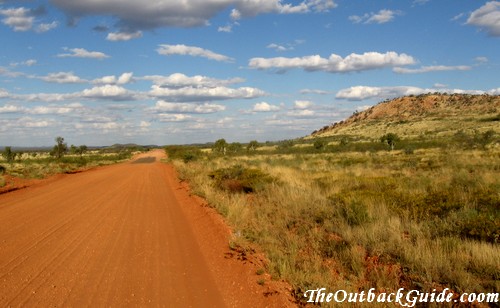
The climate across these arid 70% of Australia is not consistent. Let me say it again: the Australian Outback is huge. Even though a lot of Australia is classified as desert the temperatures and amounts of rainfall vary greatly. And not just that, different parts of Australia receive their rain at different times of the year, and they also have different seasons.
Then there are the wet/dry tropics of the northern Australian Outback, a totally different Outback climate again.
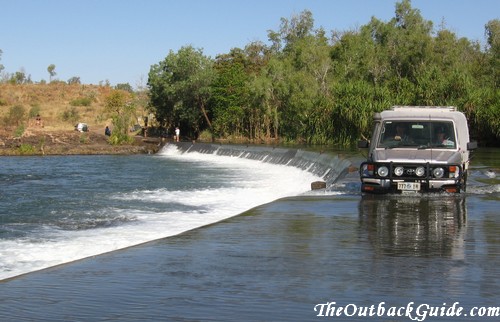
What most people consider to be the best time to travel to Australia is actually NOT the best time to visit the Outback... You will probably have to compromise somewhere.
On this page I only cover the Outback climate, not the populated regions. I will give you an overview of the climate regions so you get a general idea of what the weather in different parts of the Australian Outback is like at different times of the year.
You can find more detailed climate information in other parts of this website, where I talk about specific places and attractions. For example I explain in detail what is the best time to visit Ayers Rock/Alice Springs, or the best time to visit Kakadu.
And you can find even more detail in my free downloadable guide to Outback Australia. It has a whole chapter dedicated to the question, "When is the best time to visit Australia".
Outback Climate - The Arid Regions
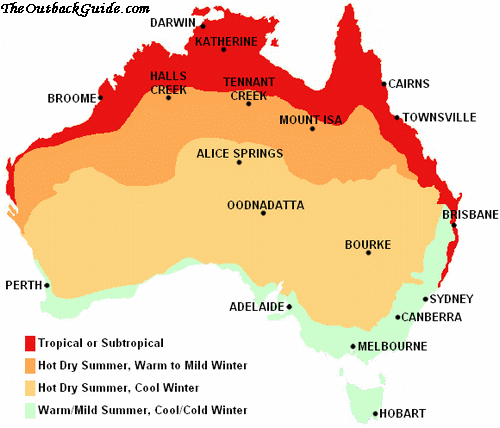
Have a look at the map above to get an idea which parts of Australia I'm talking about.
The arid regions are the areas identified as the zones with hot dry summers, covering most of inland Australia. As you can see there are two arid Outback climate zones, one with warm or mild winters and one with cool winters. (In the southernmost regions the winters are actually seriously cold.)
Both zones are best visited during the Australian winter (that's when it's summer in Europe or the US). The Outback climate is such that during winter warm, dry and sunny days are virtually guaranteed.
Even in Ayers Rock and Alice Springs, which are in the zone with cool winters?
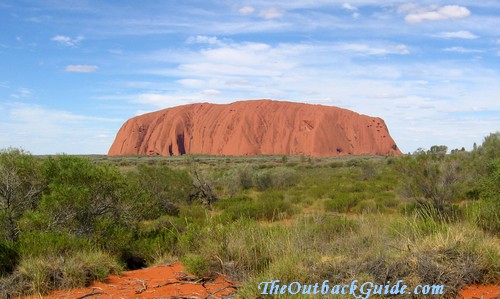
Yes, the days will be warm, even hot, but the nights will be cold! That's because you are in a desert. The desert climate is characterised by extremes, hot days and freezing nights. So if you plan any camping make sure your sleeping bag is a warm one!
July is usually the coldest month, and frosts occur about half of the nights in July and August!
Autumn and spring are a good time, too, but as you get closer to the summer months it gets hot. If you travel in these areas in summer you best schedule any activities for the very early mornings. And always, always take a water bottle with you.
I can't emphasize this enough. Drink, drink, drink! Water, that is, not sweet sodas. Drinking enough water is the single most important thing you can do to feel well in higher temperatures! It makes all the difference.
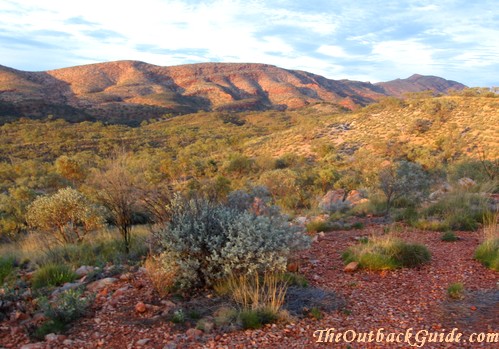
Having said that, the further south you go the more bearable the temperatures will be, even in summer. Everybody feels different about heat, and I myself would never venture too far south in winter... But that's because I live in the far north and am accustomed to high temperatures.
One more thing: the driving distances in Outback Australia are huge and if you are driving you will spend a lot of time in your vehicle.
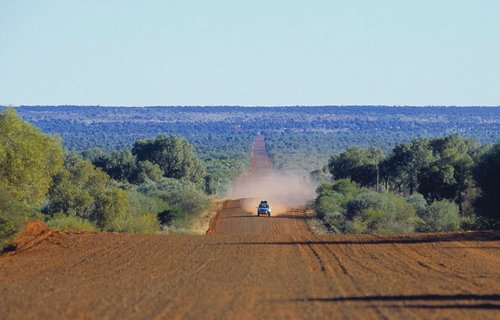
If you want to drive through Outback Australia in summer do yourself a favour and make sure the car has air conditioning.
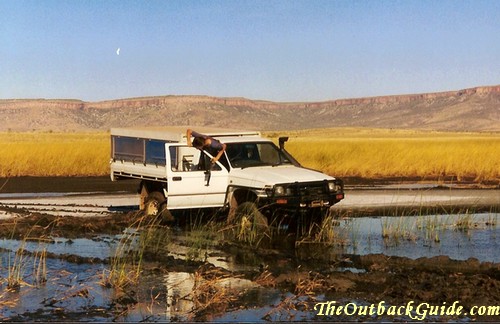
If you plan to get off the beaten track you may want to avoid the summer months in the northern parts. Rain at this time of the year is unpredictable. It may not rain for years, but if it rains it pours. Unsealed roads - and any roads off the beaten track are unsealed - can become impassable for days or weeks! At least make sure you keep a very close eye on the weather forecasts!
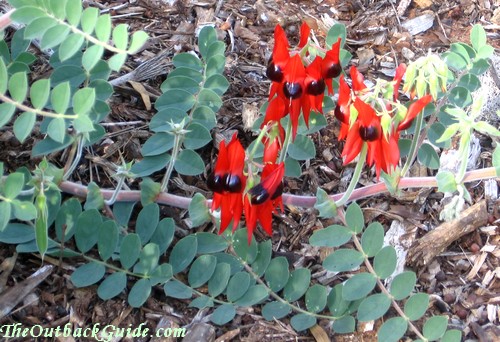
The beauty about rain is that it can transform the desert in a matter of days. Autumn is the best chance to see wildflowers. If it did rain, that is...
You can read more about the Outback desert climate in the Australian Deserts section, on the pages about the individual deserts.
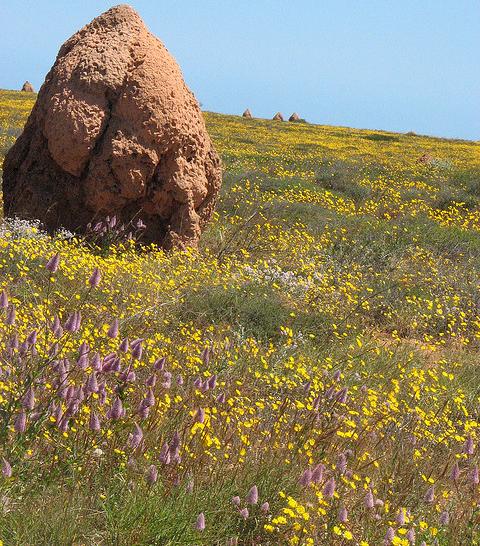
Photo by Harclade via Flickr
Outback Climate - Northern Australia
Most of Northern Australia is considered to be Outback, the climate here is tropical though. Not what you usually associate with the Australian Outback...
The northern Australian Outback has a distinct dry and wet season.
The dry season from April/May to September/October is considered to be the best time to visit. It certainly is the most comfortable time. The day temperatures are pleasant and the nights are mild. Beginning and end of "the Dry" can be a little hot and humid. On the plus side there are fewer tourists and lower prices.
The wet season is hot, hot, hot and humid. Thunderstorms are frequent during the first half, and cyclones and extended flooding are a threat in the second half. November, the "build up" for the monsoon, is probably the worst time with the highest temperatures and little or no cooling rains.
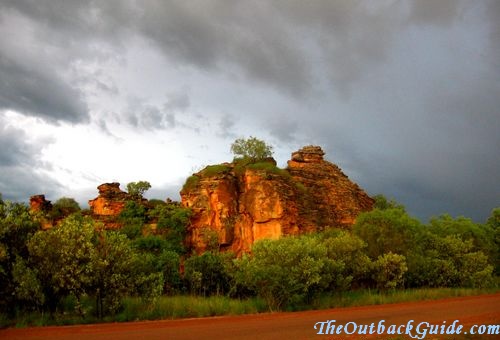
"The Wet" is not a good time for the average tourist, but if you are adventurous, can handle the heat, and are flexible with your schedule you could be in for the experience of a lifetime.
This might surprise you, but the Wet is considered by many locals to be the best time of the year in the northern Outback climate...
It is the breeding season and wildlife abounds. Our red world gets covered in a lush green lacework of fresh vegetation and all the waterfalls in our favourite swimming spots that had dried up over the dry season are flowing again.
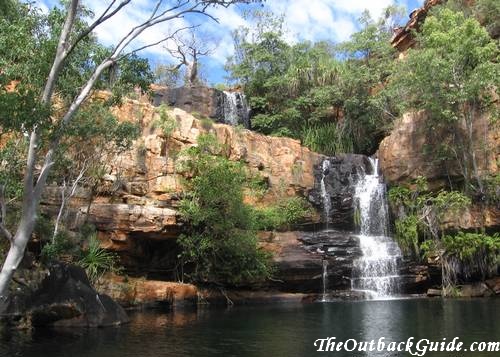
Of course it doesn't rain every day, most rains happen in the evening or wee hours of the morning. The dramatic skies and the lightning show accompanying the tropical thunderstorms have to be seen to be believed.
But travel can be restricted. The many unsealed roads in the Australian Outback are closed, and even highways get cut off at times. It is something I would only recommend to people who have a lot of time. (And did I mention another reason why we locals love the Wet? We have the place to ourselves again.)
The best time to visit Outback Australia?
You decide :-)
Tables With Outback Temperatures
Return to Australian Outback article index
Return from Outback Climate to Outback Australia Travel Guide home page.


