No need to climb Uluru

by John
(Brisbane, Queensland, Australia)
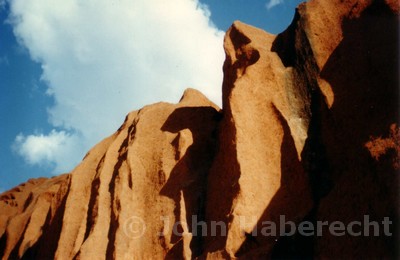
I've been to Uluru twice now, and both times have been very powerful experiences, but I didn't feel the need to climb it.
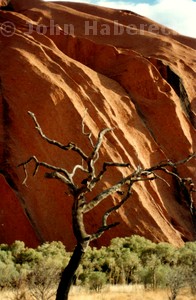
Base of Uluru
I would have to say that being there exceeded my expectations - this might seem a bit cliched, but anyone sensitive in any way to the energy of a place will find that Uluru has a very powerful energy.

Our group had as a guide one of the traditional owners of Uluru who told us stories of his life, of the importance of the land, and why his people prefer people not to climb.

He travelled with us on the journey from Alice Springs, so by the time we arrived at Uluru we felt we knew quite a bit about its significance to the local people.
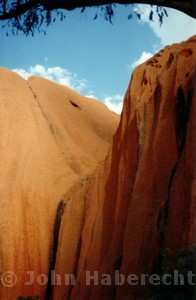


View towards Kantju, an important spiritual site at Uluru
Our group walked around the base of the rock and I know for most of us this was very powerful.

To me it is the height of ignorance and rudeness, and in fact a form of racism, for people to climb Uluru despite the wishes of its traditional owners, and I hope that access is restricted in the near future.

I don't know that it would make a huge difference to visitor numbers; are there any statistics on how many visitors actually do the climb?


Comments for
No need to climb Uluru

Click here to add your own comments

How many people climb Uluru, and why.
by: Birgit

Thanks a lot for your input John! I can't but agree with everything you say.

I did some digging to see if there are new numbers regarding the percentage of visitors who climb Uluru.

The numbers have been steadily dropping sine 1990, and currently the Aboriginal owners are seriously considering a blanket ban.

I found an interesting paper, published in late November, 2007, in Geographical Research. It is called "Constructing the Climb: Visitor Decision-Making at Uluru" by Sarah James.

The paper suggests that nearly half of the 400,000 yearly visitors climb Uluru. I have to say, that does not match what I have seen on my own visits. It looked a lot less to me.

Some other interesting tidbits:
  • Europeans show the most respect for Aboriginal culture and are least likely to climb.

  • Australians are among the most likely to climb, generally out of a feeling that they own the rock as much as the Anangu do. (Which matches exactly the comments I received in some emails.)

  • The climb is heavily promoted in Japan and 80% of Japanese tourists do climb.


The main finding in the paper is that visitors are generally open to the wishes of the traditional owners and would forgo the climb, if only they were given enough information and advance notice.

Most people interviewed said they were not given enough information about the Anangu's wishes, and that it would have changed their decision if they had been informed earlier.

From the paper:
"Many tourists continue to climb as they are given the impression in pre-trip tourism information that it is desirable and acceptable. It is too late to affect their decision by the time they see the 'Please Do Not Climb' sign at the base of Uluru"

(Which matches what I suggested on my page about climbing Uluru.)

The paper also notes that tour operators are becoming more open. They feel the climb is less important to visitors than it used to be and do not expect long term damage to their business if the climb was closed. In other words, if nobody wants to climb it any more, the may close the climb. But probably not if it means tour operators will lose money.

To close the climb would have to be a decision by the park's board of management in consultation with the Federal Government. It's not a decision that the Anangu can make on their own, as many people assume.

Why climb Uluru
by: danielle theodossio

Well, the thing is that I think it is a really dangerous thing to climb. The wind is really fast. I think that you should not climb Uluru because you can risk your life and you can die or get injured and it is really sad. So that is why you should not climb Uluru

So you can go over there if you want to, but you can't climb Uluru. That's all I am saying about Uluru. Just don't climb Uluru. see ya

this is it
by: Anonymous

It is true that is very dangerous to climb Uluru. However, I have heard comments saying that Australian government encourage aboriginals to suggest not to climb it. For example, they ask them: -Do you think is very dangerous and that many people could die by climbing Uluru? They ansewer yes. Then they ask again: do you think is better for tourist not to climb because they are risking their lifes? and then they say yes. Then they put like they are the ones suggesting not to climb. I dont know if that is true, but what I have seen is that many tourists come to Uluru to climb it. They want to climb it because is a different experience, is adventure or whatever.

This is a tourist attraction which generates a lot of money for Australian economy.. if it is a sacred site, or really important for aboriginal culture, why then they just prohibit the climbing? like they have prohibited the entrance to sacred sites. I think the answer is because it would reduce a visitor atraction and thus, the income.

It might be that they say not to climb it but if you climb it is up to you, so they are not responsible for any injurie or death that could happen.

-sorry for my english, its not my native language-

I climbed and I'm glad I did
by: Kat

I climbed the Uluru and it was basically the most amazing thing that I ever did. I cannot describe how exhilarated and spiritual it felt. This, you have to experience yourself.

I also disagreed that it's dangerous to climb. The Uluru is closed to the climb when strong winds actually become dangerous. So when you say it's dangerous because the wind is strong, that's really not quite true.

Most deaths that have occurred were due to heart attacks. Now ask yourself, how many heart attacks have happened each year and how many happened, say, in the homes? Does it make living in a home more dangerous? If you are at risk of a heart attack, you shouldn't be climbing the Uluru. Or ride a roller coaster.

In terms of actual climbing accidents, the Uluru ranks pretty insignificantly compared to other attractions in the world. You are a lot more likely to die in a car accident, statistically speaking.

Scary as hell and LOOKS dangerous? Yes. But actually dangerous? No.

All I'm saying is, after I made the climb, I knew without a single shred of doubt that had I not, I would have regretted it very severely.

But then I guess if I never climbed it, I wouldn't have known what I missed out on anyway.

Oh, for crying in a bloody bucket!
by: The TreeLady of VT

I simply cannot believe that in the year 2009, we are still - STILL - having the discussion about whether or not to climb Uluru.

For crying in a flaming bucket, haven't the First People of this most precious land lost enough, suffered enough, without having to put up with self-centred tourists climbing this most sacred of sacred sites?!

There is no more perfect example of our obsession with possession than the desire to climb Uluru.

Go and stand in the embrace of that sacred monolith, and be still for more than a few moments - go on, try - and it will be hard for those subscribers to instant gratification - just try to be still and try hard to appreciate what a privilege it is to stand in the proximity of such a presence. Then, if you must, think about that tired, passe question about whether or not to climb Uluru. If you have one vestige of decency, you will know that Uluru is not for climbing. To look upon and be near it is enough - ENOUGH!!

well....for crying in a bloody bucket.....
by: Anonymous

I quite simply have had enough of this argument as well. If the Anangu people prefer for it not to be climbed, then all they have to say is no.....but that would mean loss of income wouldn't it!!

It's not up to the Anangu
by:

No, they can't. They can only do it in conjunction with the governemnt.
It would indeed mean loss of income. For the tour operators. That's why the climb will remain open.

Why I would climb
by: Wyn

I am planning a trip to Uluru early next year. While I don't know if I will climb it. I am open to it.

I am open to it because I have respect for different cultures in as far as a diversity of ideas and customs that should be preserved across the world. However, I do not feel I should simply adhere to any custom of other cultures "out of respect" for them.

Should I abstain from drinking alcohol out of respect for Islam? Should I stop eating shellfish out of respect for Judaism? Should I stop eating beef out of respect for Hinduism? Should we disallow women from playing the didgeridoo out of respect for aboriginal custom? That last one clashes with my own strong belief in equality for women.

If we observe one custom, surely we must observe them all. I would be respectful if visiting a mosque, church etc, but this is a purpose-built structure, not a natural landform. In my cultural tradition (anglo-australian) discovery, adventure marvelling in the natural world (including "climbing stuff") is an important tradition.

Ayers Rock Climb
by: Resi

I am planning a trip to Ayers Rock and would like to climb the rock. I am a mountain climber and have climbed in the Himalayas, Alps and Mt. Kilimanjaro. I do believe these mountains are not owned by anybody, but are for all people to be enjoyed and climbed, if they wish. If Ayers Rock wishes to receive visitors then tourists need to be free to climb the 'rock'. People come from all over the world and pay huge amount of money to make the flights to Alice Springs. Should they ever close Ayers Rock to be climbed, they need to advertise this all over the world so travellers dont book their flights and then they are not able to do what they intended to do namely climb the 'rock'. I had several people from Europe visiting and when they visited Ayers Rock, they were not able to climb as the climb was shut. I believe they should have been told before they left Europe, then they could have decided to travel to other destinations within Australia.

Re the two above comments
by: Ani

That's exactly the point. A lot of money is earned by a lot of people as long as the climb remains open. The Anangu on their own can not override the decision by the government and white people. That the climb remain open was a condition before the land was, given back to them. Symbolically, one might say, since they can not do anything without consent of the government. And because WHITE people earn money from this, a lot of money, the climb will remain open.
There are geological features that are privatly owned, all over Australia. I appears if white people own say a spectacular gorge, then it's ok to close it to the public, or charge entry and then only allow you to enter parts of it. This happens all over the country. But for Uluru it's not ok?
And you seriously think it's sensible to demand that the National Park people predict at least two weeks in advance whether it will be too hot or windy to climb on any given day? So that no tourists end up disappointed after spending money on a flight?
How about climbing Kilimanjaro and not reaching the summit due to bad weather? Shame on the national park people there for not letting climbers know before they booked.

In response to Wyn's comment, I sure would abstain from drinking alcohol while I am visiting an Islamic country. In fact, I did, and I also observed their dress code, Ramadan, and other aspects of their culture while I was visiting. It's the minimum respect I would show any host, be it a Western host I visit in his or her house in my own country, a foreign country or Aboriginal land.
Nobody asks that we stop climbing any and all rocks. We are only asked to respect the owners wishes while visiting their land. No more and no less.

dont climb please
by: Anangu boy

i am an anangu boy who lives in the APY lands in a community called amata and i think you should not climb because in our inma only the initiated men were allowed to even the woman and children never went more than 3 metres up

if you climb it makes our ceremonies not special and its like us ruining everyone of your weddings or something

Thank you Anangu boy
by: John

Thank you Anangu boy for your comment - says it all really.

I've been watching the comments here with interest, or should I say astonishment at many of them - the sense of entitlement that some people have about an area that has deep spiritual and ceremonial significance for its traditional owners. We are guests when we visit, and should respect their wishes. It is not for us to dictate the terms.

And as for notifying intending travellers ALL OVER THE WORLD that Uluru is not going to be open for climbing because of heat or other conditions ... did that person think about that statement before they wrote it I wonder!

my opinion
by: your average joe

Well its all good and well to huff and puff over the internet like true bloggers, but once you've taken those grand strides to reach the peek of this massive rock, then my ignorant friend you can tell me its not not just a big rock that benefits our otherwise bland tourist attractions.

One thing the English can hang there hat on, is knowing just the way to turn up to a party uninvited. So honestly, measuring previous performance would you seriously consider that we drop democracy for an impressive rock.

Sorry buddy, but the revenue that baby pumps out, helps to pay your welfare, and your kids public school education.

don't climb
by: Anonymous

you should not climb uluru. this mountain is part of someones heritage and we should respect it just as we would our own.

Click here to add your own comments

Join in and write your own page! It's easy to do. How?
Simply click here to return to Ayers Rock Australia - Uluru Australia

Return to top


Return to Outback Australia Travel Guide home page